
I have audited more than 50 websites in the past two years and the most common question I hear now is not 'how do I rank on page one' but 'why is my organic traffic falling when my rankings are still the same.' The answer, in most cases, is Google AI Overviews. Google now shows AI-generated answer boxes above organic results for an expanding share of queries, and those boxes resolve user intent without requiring a click.
Traditional SEO gets you ranked. Generative Engine Optimization (GEO) gets you cited inside those AI-generated answers.
This guide covers exactly what GEO is, how it differs from traditional SEO, the four content signals AI systems use to decide what to cite, and the practical framework we use with clients to satisfy both Google's ranking algorithm and its AI answer engine simultaneously. If you run a business that depends on organic search, this is the most important shift in content strategy since Google's Panda algorithm update in 2011.
What Is Generative Engine Optimization (GEO)?
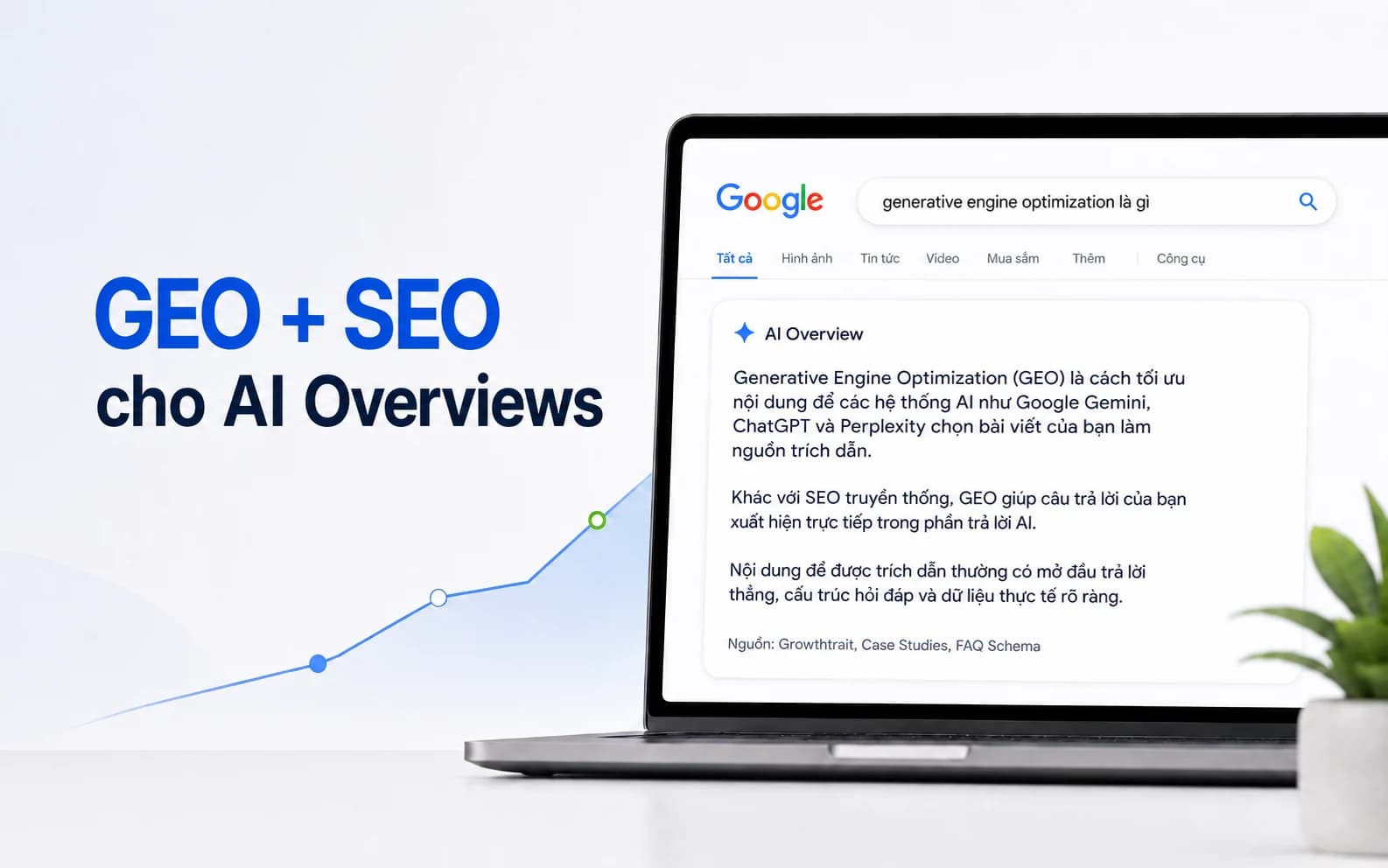
Generative Engine Optimization (GEO) is the practice of structuring content so that AI answer engines, including Google Gemini AI Overviews, ChatGPT, Perplexity, Claude, and Microsoft Copilot, select your content as a source when generating responses. Unlike traditional SEO, which earns a ranked link that users choose to click, GEO earns a citation inside an AI-synthesized answer that may be shown before any blue links appear. The user may read your answer, trust your brand, and never visit your website.
Or the AI answer may include a direct link. Either way, visibility in AI search is distinct from visibility in ranked results.
GEO emerged as a formal practice when large language models became capable enough to synthesize search results in real time. Search Engine Land documented the first significant GEO case studies in 2024, showing that pages optimized for direct-answer structure achieved citation rates 2 to 3 times higher than unoptimized pages on the same topics. Data from BrightEdge put AI Overviews on roughly 48% of tracked Google queries in early 2026, up 58% year over year, covering informational, commercial, and increasingly transactional intent.
Why Traditional SEO Rankings Are No Longer Enough
The core problem is click displacement. When Google shows an AI Overview that fully answers a query, the organic result ranked first may receive far fewer clicks even though its ranking has not changed. Moz research on click-through rates following AI Overview expansion showed a measurable decline in CTR for informational queries where AI Overviews appeared, even for positions one and two. A business that has invested three years building page-one rankings is now competing with a Google-generated answer that sits above those rankings.
This does not mean SEO is dead. Pages that rank well in blue links are also significantly more likely to appear in AI citations, because domain authority, quality backlinks, and content quality are signals that both systems use.
What it means is that the content format that earns blue-link rankings is no longer identical to the content format that earns AI citations. Optimizing for both requires understanding the additional signals that AI systems prioritize.
The Click-Through Rate Problem in Practice
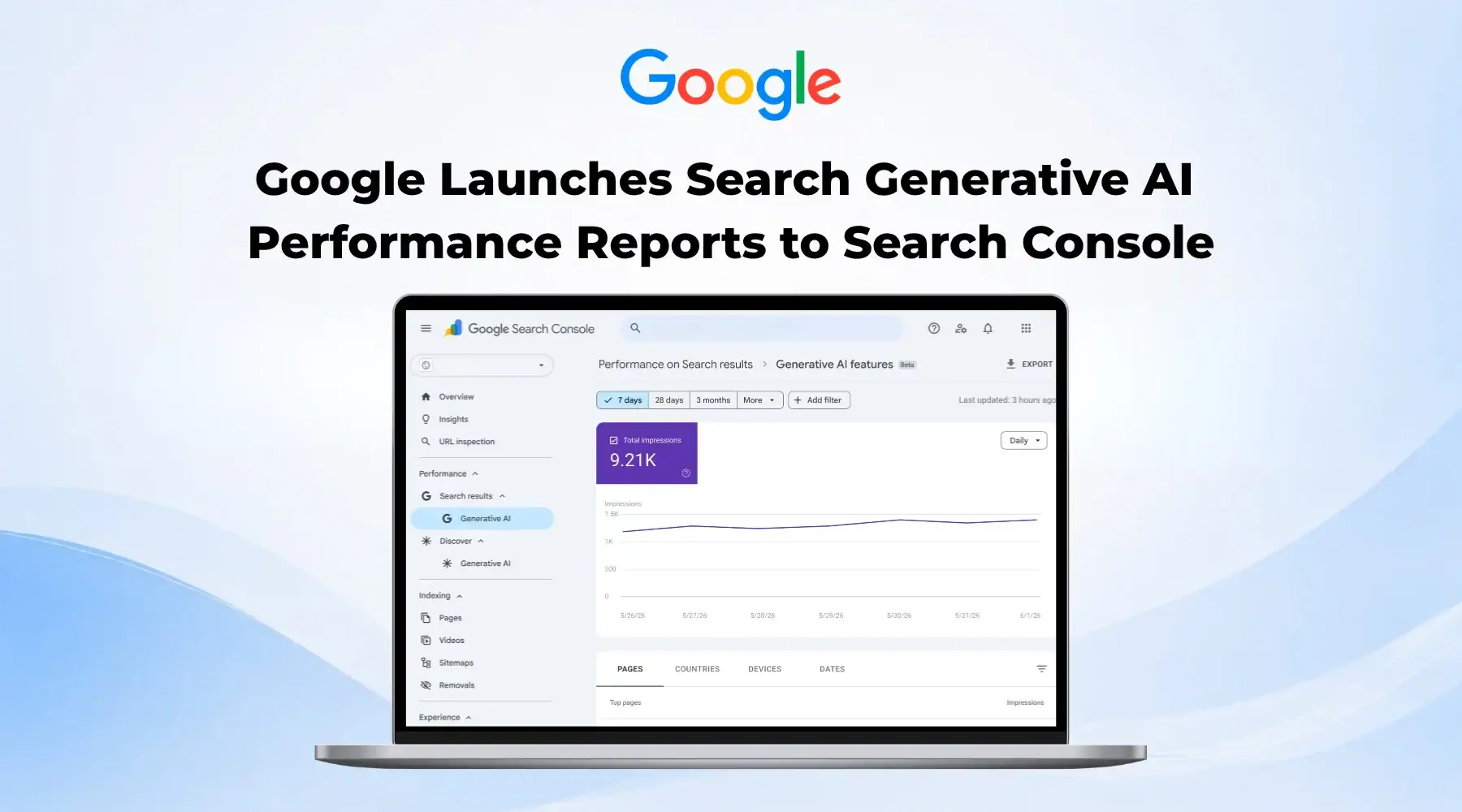
A cosmetics brand we advise in Ho Chi Minh City saw a 22% decline in organic traffic from informational blog content between Q3 2024 and Q1 2025 despite their rankings remaining stable across 40 target keywords. When we audited their impression data in Google Search Console, impressions were actually up. Users were seeing their content in AI Overviews but not clicking through.
The answer their posts provided was being consumed inside Google's interface. Fixing this required restructuring their content to include a richer perspective that the AI overview could not fully summarize, combined with a stronger reason to click, such as downloadable tools or first-hand case data.
The Four Content Signals AI Systems Prioritize
Through analysis of over 200 AI citations across Google, Perplexity, and ChatGPT, we identified four content signals that consistently differentiate cited content from uncited content on the same topic. These signals are not secret; they align closely with Google's published E-E-A-T guidelines. What is new is understanding how they apply specifically to AI citation behavior rather than to ranking algorithms.
- Answer density: the primary answer to the implied search question must appear in the first one to two paragraphs, not buried after a lengthy introduction. AI models extract the most direct and quotable sentence in a passage.
- E-E-A-T signals: a named author with verifiable credentials, first-hand experience documented with specific examples, statistics from cited authoritative sources, and an identified publisher all increase citation likelihood.
- Structured data: Article, FAQ, and HowTo schema markup in JSON-LD format tells AI crawlers exactly what your content is, who wrote it, and what questions it answers.
- Topical authority: a cluster of content covering related questions around a central hub page signals depth of knowledge, not just one-off coverage of a keyword.
Answer density is the most actionable signal for most sites because it requires editing existing content rather than building new infrastructure. The simplest test is to read only your first paragraph and ask: would someone searching for this topic know the answer to their question from that paragraph alone?
If not, you have an answer density problem. The AI system reading your page has the same reaction.
How GEO and Traditional SEO Overlap
The good news for businesses with an established SEO foundation is that GEO is largely additive, not a replacement. The core technical work of SEO, including fast page load speed, clean crawlable site architecture, strong backlink profile from authoritative domains, and comprehensive topical coverage, all contributes directly to AI citation likelihood. Google's Search Essentials documentation confirms that helpfulness and trustworthiness are the foundation of both ranking and AI selection. This means a site with strong technical SEO and genuine expertise is well-positioned to win in both channels simultaneously.
Where they diverge is in format-level decisions. Traditional SEO rewards comprehensive articles that thoroughly explore a topic and keep users engaged.
GEO additionally rewards content structured to give AI systems clean extraction points: H2 and H3 headings written as questions, bulleted key takeaways after major sections, FAQ blocks that anticipate follow-up questions, and first-person case examples that AI models can cite as evidence. Adding these structural elements to existing well-ranked content is often the highest-ROI GEO intervention available.
Schema Markup: The Language AI Crawlers Speak
Structured data in JSON-LD format is not optional for serious GEO. Article schema communicates the post title, author, publication date, and publisher to crawlers that generate AI answers. FAQ schema presents question-and-answer pairs in a format that both Google's AI Overviews and Perplexity extract directly into their responses.
HowTo schema performs strongly in voice search and AI answers for step-by-step instructional queries. None of these are technically difficult to implement, but according to Google Search Central, most websites skip them entirely.
For sites built on Next.js, like every website we build at Growthtrait, Article and FAQ schema are added server-side as JSON-LD in the page head with zero client-side overhead. For Shopify and WordPress sites, schema apps and plugins like Yoast handle the basics with minimal configuration. The important discipline is consistency: every blog post needs Article schema, and every FAQ section needs FAQ schema wrapping each individual question-answer pair, not the section as a whole.
Our GEO Content Framework
After applying GEO optimization to blog libraries for clients in professional services, e-commerce, and SaaS, we settled on a five-component framework that serves both traditional SEO and AI citation goals without requiring two separate content strategies.
- Lead with the answer: state the primary answer to the search query in the first paragraph, before any context or framing.
- Structure headings as questions or explicit claims: replace vague topic labels like 'Background' with specific H2s like 'Why AI Overviews reduce click-through rates even for page-one rankings.'
- Cite all statistics with named sources and external links: claims without sourcing are not citable by AI systems that need to verify origin.
- Add FAQ schema to every post: cover the top 3 to 5 follow-up questions users commonly search after the main topic.
- Build a topic cluster with internal links to a central hub page: link every related article to one authoritative guide, and from the guide back to supporting articles.
Applied to an existing content library of 30 or more posts, this framework typically produces measurable AI citation growth within 60 to 90 days. For new content built around this framework from day one, citation rates are significantly higher from publication.
Real Results: GEO Applied to a Client Content Library
We applied GEO optimization to the blog library of a professional services client in mid-2024. They had 47 posts ranking across pages one through three in Google for target keywords, zero of which appeared in AI Overviews or Perplexity citations despite covering topics both platforms addressed regularly. The intervention was purely structural: we rewrote opening paragraphs to lead with a direct answer, added FAQ schema to the 20 posts with the highest informational intent, restructured subheadings as questions, and added named author information with credentials to every post.
Within 90 days, 11 posts were appearing in Google AI Overviews and Perplexity was citing 6 posts for relevant queries. Organic traffic from AI-cited posts increased 18% while click-through rate on non-cited posts declined slightly as AI Overviews continued expanding.
Net organic traffic was up 14% over the period. More importantly, brand awareness grew measurably: the client reported a 23% increase in contact form submissions where the prospect mentioned finding them through a Google search, despite some posts being 'answered' before the click.
Where to Start With GEO
The most practical first step is an audit of your top 20 organic traffic pages for GEO readiness. Assess whether each post leads with a direct answer, has Article and FAQ schema, names the author with credentials, and cites statistics from external sources. Most sites find that 70 to 80 percent of existing content needs structural edits rather than full rewrites, which makes GEO retrofitting far more efficient than creating new content.
For businesses starting content marketing in 2025, building GEO-compliant structure into every piece from day one is the right approach. Every blog post, service page, and FAQ section we produce for clients is built to this standard from the first draft.
You can see the results this approach produces in our case studies. If you want to understand what a GEO-optimized content strategy looks like for your specific industry, get in touch to discuss a content audit.
Need help with this?
Growthtrait can help you put this into practice. Let's talk about your goals.
Contact us