

There is a particular kind of irony I see almost every month. An engineering team builds genuinely impressive AI products, ships them, wins a few enterprise logos, and then discovers that when a prospect asks ChatGPT or Gemini to recommend a company that does exactly what they do, they are not mentioned. Their competitor is. The competitor's product is worse. The competitor's content is better structured.
This is no longer a marginal problem. G2 surveyed 1,076 B2B software buyers and decision makers in March 2026 across North America, EMEA and APAC, and found that 51% now begin their software research in an AI chatbot more often than in Google, up from 29% in April 2025. In the same research, 71% said they rely on AI chatbots for software research, up from 60% just seven months earlier.
This guide covers why the standard B2B SEO playbook underperforms for AI development companies specifically, where technical buyers actually form their shortlist, which assets get pulled into AI answers, and how to measure any of it when the click is no longer the unit of success.
Why the Standard B2B SEO Playbook Underperforms Here
Most agency SEO for a software company looks the same: pick a set of commercial keywords, publish a monthly blog post around each one, build some links, report on rankings. That playbook assumes a buyer who types a query into Google, scans ten blue links, and clicks. For an AI development company, that buyer is now the minority.
The people who buy AI engineering work are technical. They are CTOs, heads of platform, staff engineers, and increasingly the product leads who now sit next to them. They do not read listicles. They read documentation, GitHub repositories, changelogs, and engineering write ups. And when they want an overview of a vendor landscape, they ask a model rather than reading fifteen tabs.
So the content that wins their attention is not the content that ranks for a fat commercial keyword. It is the content that is precise enough, well structured enough, and specific enough that an AI system will lift it into an answer, and credible enough that a skeptical engineer will trust it when they land on the page.
The Shortlist Is Now Formed Before You Know the Buyer Exists
The most consequential number in the G2 research is not the 51%. It is this: 69% of buyers said they chose a different software vendor than the one they had originally planned to buy, based on guidance from an AI chatbot. One in three bought from a vendor they had never heard of before that conversation.
Read that again from the perspective of an incumbent. Brand recognition, built over years, is being reshuffled inside a conversation you cannot see, cannot attribute, and cannot bid on. Read it from the perspective of a challenger and it is the best news in a decade. Being unknown is no longer disqualifying. Being uncitable is.
That reframes the whole objective. You are not trying to rank a page so someone clicks it. You are trying to be the source that a model reaches for when a buyer asks which companies do this well, and to be legible enough that the model can state what you do without hedging.
Your Documentation Is a Ranking Asset, Not a Cost Centre
For most AI development companies, the highest value SEO asset already exists and is being treated as an internal chore. Documentation, API references, integration guides, and architecture write ups are exactly the kind of content that both search engines and AI answer engines prefer: specific, factual, structured, and unambiguous about what a thing does.
Marketing pages describe capability in adjectives. Documentation describes it in verbs and parameters. When a model is assembling an answer about which vendor supports a particular integration or model, it is drawing from the source that states this plainly, not from the one that promises transformative outcomes.
The practical work here is usually not writing new documentation. It is making the documentation you already have publicly crawlable, internally linked to your commercial pages, and structured with real headings that answer real questions. Three things we check on every engagement:
- Docs are on your primary domain or a crawlable subdomain, not locked behind a login or rendered entirely client side where crawlers see an empty shell.
- Every doc page has a single clear H1 that names the thing, and H2s phrased as the questions an engineer would actually ask.
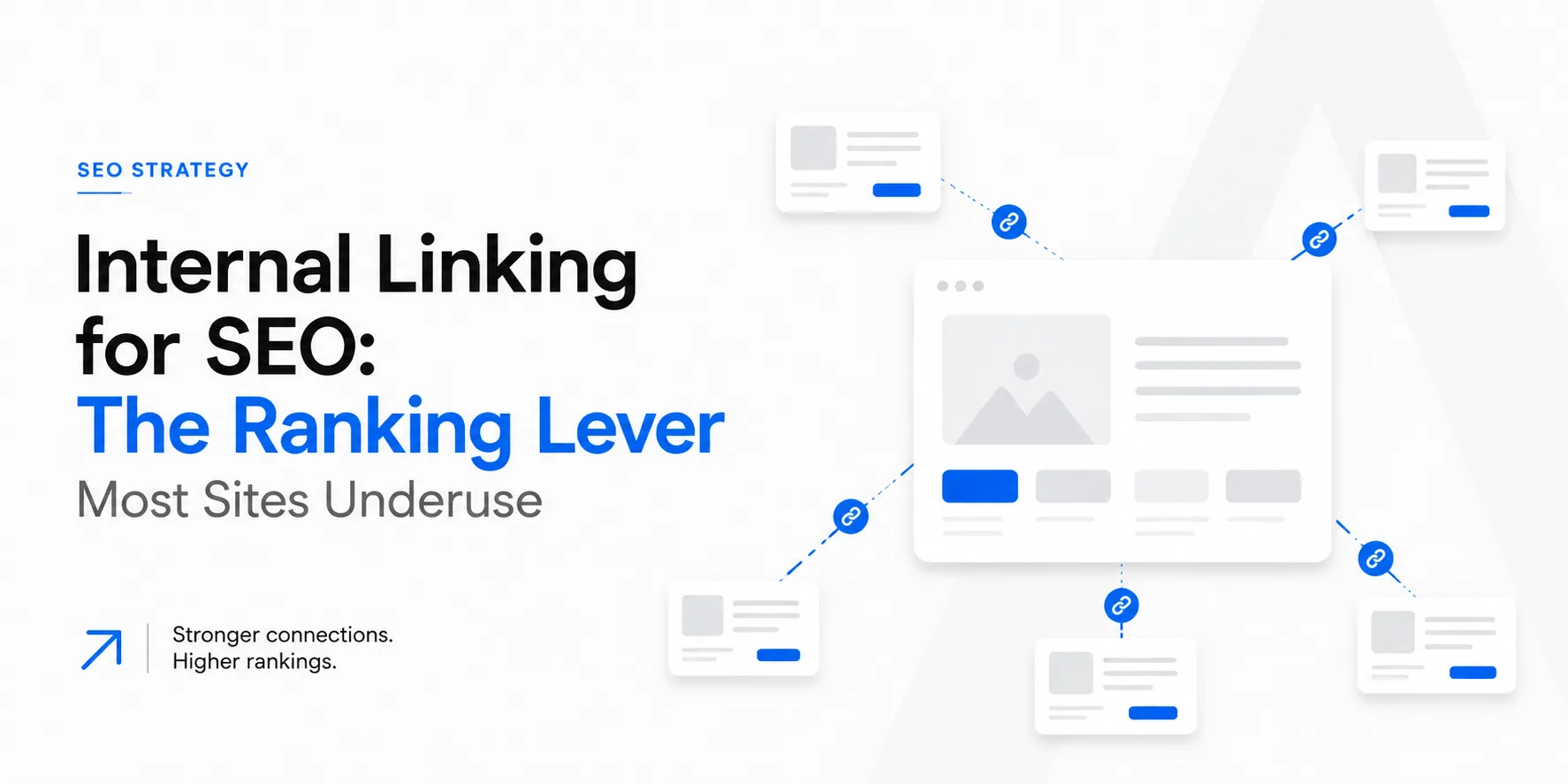
- Docs link back to the relevant service or product page, and the service page links into the docs. Most companies have the second link and not the first, which strands their most authoritative content.
Comparison and Alternatives Pages Are Where AI Answers Get Sourced
When a buyer asks a model to compare vendors, the model has to source that comparison from somewhere. If you have never published a page that compares your approach with the alternatives, that page gets sourced from someone who has, and that someone is rarely neutral about you.
This is the single most underbuilt page type at AI development companies, and the reason is usually cultural. Engineering led companies find comparison pages distasteful. They feel like marketing. But the comparison is going to be made regardless, in a chat window, by a model drawing on whatever material exists. The only question is whether your account of the tradeoffs is in the training set of that answer.
The version that works is not a feature grid where you win every row. That is transparently self serving and, more importantly, it is not citable, because a model synthesising a balanced answer will not lean on a source that reads as a sales sheet. The version that works states honestly where the alternative is the better choice, then states precisely where it is not. Concrete beats flattering.
Category Definition: Own the Question Before You Own the Answer
Buyers who start in a chatbot rarely open with a vendor name. They open with a problem. They ask what the options are for a class of work, then narrow. That means there is an entire layer of demand above your product keywords, sitting at the level of the category itself, and almost nobody is writing for it deliberately.
If you build retrieval systems, the question is not just who builds retrieval systems. It is what the tradeoffs are between the approaches, when each one breaks, and what it costs to run. The company that answers that question thoroughly and honestly becomes the reference the model uses to frame the whole space, and framing the space is how you end up inside the shortlist that gets recommended.
This is the same principle behind generative engine optimization, applied at the category level rather than the article level. The difference is that for an AI development company, you have something most content marketers do not: the actual engineering experience to answer the hard version of the question rather than the shallow one.
The Technical Layer: Making Your Site Legible to AI Crawlers
None of the above matters if the systems generating these answers cannot read your site cleanly. The technical requirements are not exotic, but they are skipped constantly, particularly at companies where the marketing site was built quickly and never revisited.
- Server render the content that matters. A page whose text only appears after client side JavaScript executes is a page some crawlers will read as empty.
- Add Organization and Article structured data in JSON-LD. It tells crawlers who published a piece, who wrote it, and what it is about, which is exactly the provenance an answer engine needs before it will cite you.
- Name your authors and give them real credentials. An unattributed post is a weaker citation candidate than the same post with a named engineer behind it, per Google's own Search Essentials guidance on trustworthiness.
- Check what your robots.txt is actually blocking. We regularly find AI crawler user agents disallowed by a rule someone added years ago and nobody has revisited since.
Performance matters here too, and not only for rankings. A documentation site that takes four seconds to render its first meaningful content loses the engineer before they reach the paragraph that would have convinced them. We treat that as a build standard rather than a post launch fix on every site we ship, which is covered in more depth in our Core Web Vitals guide.
What to Measure When the Click Is Not the Point
The uncomfortable part of this shift is that the metrics most teams report on are becoming less informative. Rankings can hold steady while traffic falls. Impressions can climb while clicks flatten. Neither number tells you whether a model recommended you inside a conversation that ended in a demo request.
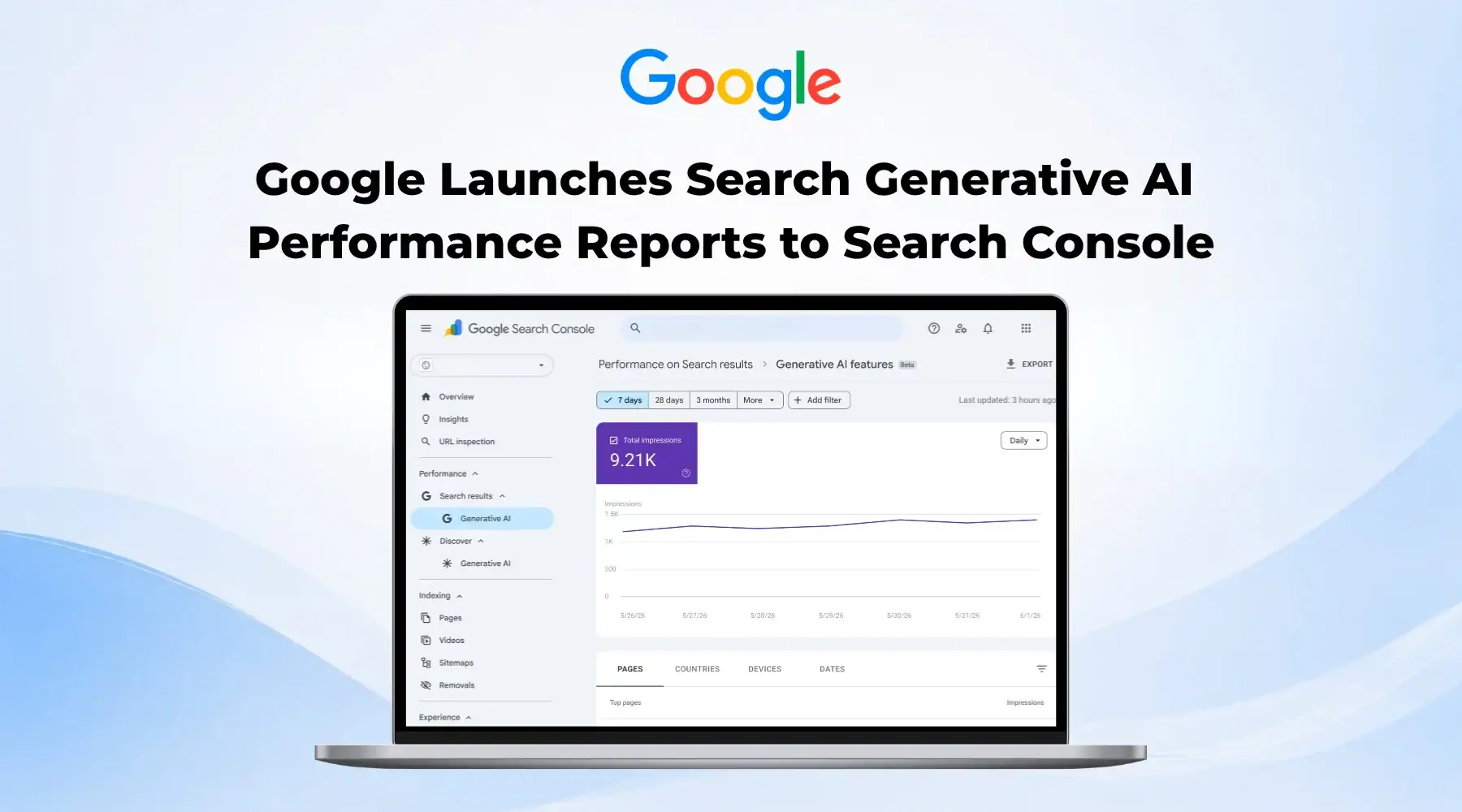
The measurement stack that actually reflects reality has three layers. First, classic search performance from Google Search Console, which still tells you whether your pages are being seen, and which now includes reporting on AI surfaces. Second, citation tracking: running the prompts your buyers would actually type into ChatGPT, Gemini, Perplexity and Claude on a fixed schedule, and recording whether you appear and how you are described. Third, and most important, the self reported source on your inbound forms. When a prospect writes that they found you because an AI assistant recommended you, that is the ground truth no dashboard will give you.
The description matters as much as the mention. A model that names you but describes your positioning wrongly is not a win. It is a content problem with a clear fix, which is that the source material it drew from was ambiguous.
Where to Start
Start by running the ten prompts a real buyer would use. Not your brand name. The problem statements: the ones about the category, the tradeoffs, and the vendor landscape. Record who gets named, what gets said about them, and where the answer was sourced from. That exercise takes an afternoon and it reliably reframes the entire content roadmap, because it shows you precisely which questions you have no presence in.
Then fix the two cheapest gaps first, which are almost always the same two: documentation that is not crawlable or not linked to your commercial pages, and the complete absence of an honest comparison page for the alternatives your buyers are already weighing you against.
This is the work our SEO and AI search service is built around, and it is work we run on ourselves, because Growthtrait is an AI development company competing in exactly this market. You can see how the approach plays out for clients in our case studies. If you want a frank read on where your company currently stands inside AI answers, contact us and we will run the prompt audit with you.
Need help with this?
Growthtrait can help you put this into practice. Let's talk about your goals.
Contact us