
Ask whether Jev beats ChatGPT or Claude and you are asking the wrong question. Jev, GPT-6 Astra, and Claude Fable 5.1 all launched within the same three weeks of September 2026, and it is tempting to line the three of them up on one chart. But Jev was never built to compete with a chat model. It was built to handle the part of a workflow a chat model is overkill for.
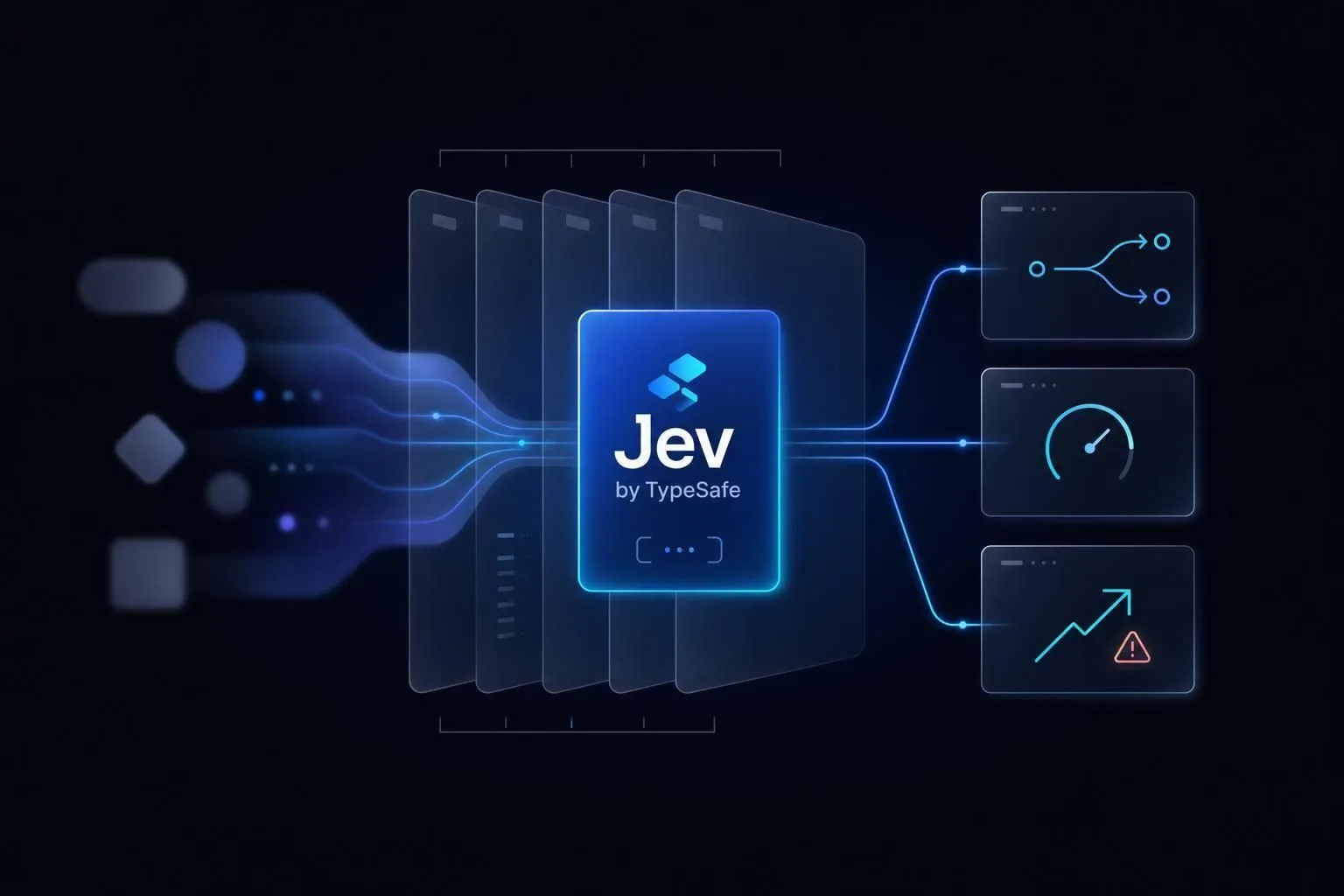
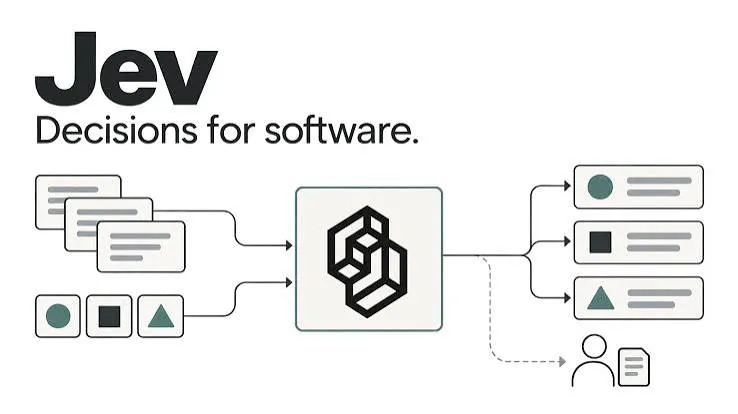
That distinction matters more than any benchmark. GPT-6 Astra and Claude Fable 5.1 are large language models: they read and write open ended text, hold a conversation, and reason through a problem across many steps. Jev is what TypeSafe AI calls a System One model, or what the industry has started calling a decision model: it accepts a typed question and returns a typed answer with a probability attached, and it cannot produce free-form text at all.
This post is not about which model wins. It covers what actually separates a decision model like Jev from a full LLM like GPT-6 Astra or Claude Fable 5.1, where each one is the better tool, the real tradeoffs on cost, latency, and accuracy, and a simple framework for deciding which one belongs in a given part of your workflow.
What Are We Actually Comparing?
GPT-6 Astra and Claude Fable 5.1 are autoregressive language models: they generate a response token by token, each one shaped by everything generated before it, which is what lets them write a paragraph, hold a conversation, explain their reasoning, or navigate a browser across many steps.
Jev works differently on purpose. It is non-autoregressive, producing a typed output in a single parallel pass rather than token by token, and its answer has to fit a schema decided in advance: a choice from a fixed set of options, a score against ordered levels, or a yes or no evaluation. There is no essay, no explanation, no conversation. That is the entire comparison in one sentence: an LLM writes, a decision model decides.
Task Fit: What Each One Is Actually Built For
Line the two categories up against real tasks and the split becomes obvious.
- Open ended writing, explanation, or a multi-turn conversation: a full LLM like GPT-6 Astra or Claude Fable 5.1, since that is what autoregressive generation is for.
- Classification, routing, scoring, or verifying another system's output: a decision model like Jev, since the answer already fits a fixed set of options and speed matters more than prose.
- Multi-step reasoning through an ambiguous problem: a full LLM, since a decision model cannot hold a chain of open ended reasoning the way a chat model can.
- Navigating a live interface across many steps, the computer use and browser use work covered in our post on ChatGPT Atlas: a full LLM built for that job, such as GPT-6 Astra.
- A single fast decision inside that same browsing workflow, like judging whether a page shows an add to cart button or a sold out message: a decision model, since a full chat model is unnecessary weight for that one call.
Cost and Latency: Where the Gap Is Real
This is where the difference stops being theoretical. TypeSafe prices Jev at $0.042 per million input tokens with free output, and reports response times of 70 to 500 milliseconds. Standard API pricing for GPT-6 Astra and Claude Fable 5.1 runs around $10 per million input tokens and $50 per million output tokens, with blended real world costs closer to $7 to $8 per million tokens once caching is factored in, as we covered in our GPT-6 Astra vs Claude Fable 5.1 comparison.
That is a genuine gap for high volume, narrow decisions, and it is the entire reason a decision model exists. But it is not a fully fair comparison either. A language model producing type names, schema, and explanatory prose is doing more work per call than a model that only emits one constrained decision, so a raw multiple like Jev's claimed 40 to 200 times speed advantage should be read as a best case rather than a rule for every task.
Accuracy and Correctness: Different Failure Modes
The two categories do not just perform differently, they fail differently. A language model's classic failure mode is hallucination: inventing a fact, drifting off topic, or producing an answer that sounds confident but is not grounded in anything real. Constraining the answer space is exactly what Jev is built to prevent, which is the basis for TypeSafe's claim that it cannot hallucinate.
That claim is narrower than it sounds. Jev cannot return an answer outside the schema it was given, but it can still confidently return the wrong answer within that schema, a distinction developers raised quickly after launch. Worth remembering too: TypeSafe's own published benchmarks grade Jev's workflow evaluations by agreement with the averaged answers of GPT-6 Astra and Claude Fable 5.1, not against independently verified ground truth, so the fairest test of accuracy for either category is still the one you run on your own task.
Decision Model vs Browser Use: Not the Same Question
It is easy to conflate this comparison with a different one: decision models versus browser use agents. They are not the same axis. GPT-6 Astra's computer use capability and the browsing work ChatGPT Atlas pioneered are about navigating a live interface across many steps, clicking, filling forms, deciding what to do next. Jev is not built to drive a browser at all. It is built for the single decision inside one of those steps. A real agentic pipeline is more likely to use both together than to choose one over the other: a language model planning and acting across a browsing session, and a decision model handling the fast classification calls along the way.
A Simple Framework: When to Use Which
Rather than picking a winner, use the shape of the task to decide.
- Reach for a full LLM like GPT-6 Astra or Claude Fable 5.1 when the task needs open ended writing, explanation, a real conversation, nuanced judgment without a fixed answer set, or driving a browser session end to end.
- Reach for a decision model like Jev when you are making the same narrow decision at high volume, the answer genuinely fits a fixed set of typed options, latency or cost at scale actually matters, and you can verify accuracy against your own ground truth before trusting it in production.
- Expect to use both in the same pipeline rather than choosing one. A language model handles generation, planning, and conversation. A decision model handles the classification, routing, and verification calls sprinkled throughout.
Where This Leaves Things
Jev is not trying to replace ChatGPT or Claude, and neither GPT-6 Astra nor Claude Fable 5.1 is built to do what Jev does. The more useful question was never which one wins. It is which shape of problem you actually have, and matching the model to that shape rather than to whichever one is loudest in its launch post this month.
If you are building an AI pipeline and trying to work out which model belongs where, our AI training service is built to help your team make that call with your own data, not a vendor's benchmark. Contact us and we will look at your workflow.
Frequently asked questions
Is Jev better than ChatGPT?
Jev and ChatGPT are not built for the same job, so better depends on the task. For open ended writing, conversation, or browsing, GPT-6 Astra, the model now powering ChatGPT, is the right tool. For fast, high volume classification, routing, or scoring decisions, Jev is typically faster and cheaper, though its published benchmarks are self-reported.
Is Jev better than Claude?
The same distinction applies. Claude Fable 5.1 is a full language model built for reasoning, coding, and open ended tasks, while Jev is a decision model built for structured, typed decisions at high volume. They are complementary tools rather than direct substitutes for each other.
What is the difference between a decision model and an LLM?
An LLM like GPT-6 Astra or Claude Fable 5.1 generates open ended text token by token and can hold a conversation or explain its reasoning. A decision model like Jev returns a typed value from a predefined set of options, such as a choice, a score, or a yes or no answer, and cannot produce free-form text at all.
Can Jev replace ChatGPT or Claude entirely?
No. Jev cannot write open ended text, hold a conversation, or explain its reasoning, so it cannot replace a general purpose chat model. It is built to handle a narrower category of task, such as classification or routing, often alongside a full LLM rather than instead of one.
Should I use Jev for browser use tasks?
Not for driving the browser itself. Browser use and computer use work, like navigating a page across multiple steps, is built into models such as GPT-6 Astra. Jev fits inside that kind of workflow for a single fast decision, such as judging what a page is showing, rather than for controlling the session end to end.
Need help with this?
Growthtrait can help you put this into practice. Let's talk about your goals.
Contact us